
We believe the Fed is the single most important actor in global markets. By setting interest rates for the world’s largest economy, the Fed influences the valuation of virtually every asset class.
That’s why Range places so much emphasis on understanding the Fed’s reaction function and likely policy moves—it’s hard to have a view on markets without it.
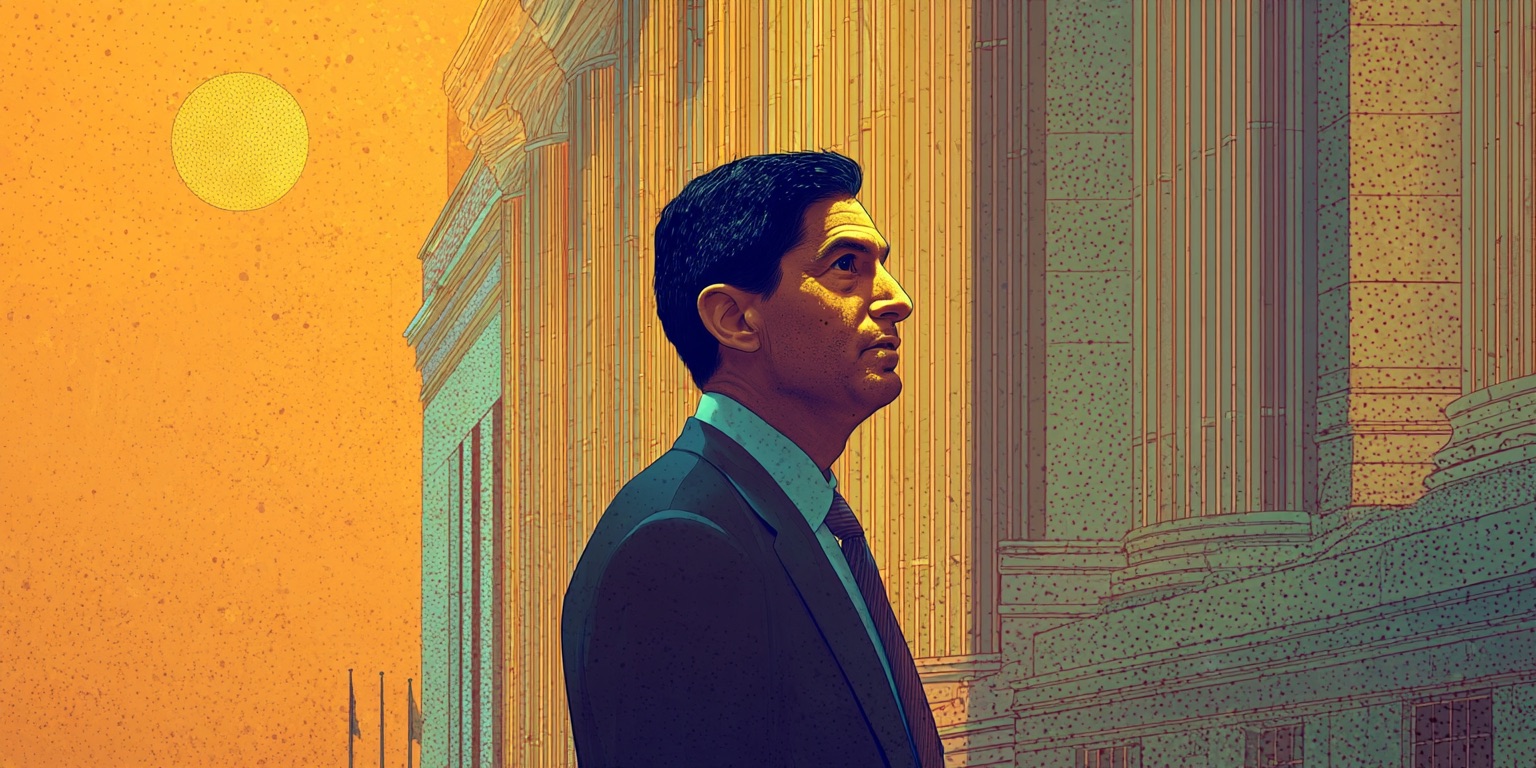
Today’s news: In a surprise relative to recent prediction-market pricing, President Trump appointed Kevin Warsh as the next Fed Chair.
Who is Kevin Warsh?
Warsh is a finance veteran who bridges the gap between Fed insiders, Wall Street, and Donald Trump’s inner circle.
Former Fed Governor (2006–2011): He was the youngest Governor appointed in Fed history and helped the central bank navigate the Great Financial Crisis of 2008.
Wall Street veteran: Before the Fed, he was an investment banker, working at Morgan Stanley on Mergers & Acquisitions. After leaving the Fed, he went on to Duquesne Family Office, a macro hedge fund where he’s been a partner since 2011.
Does Duquesne sound familiar? It’s the family office of Stanley Druckenmiller, the legendary investor who also mentored Treasury Secretary Scott Bessent. With the Fed and Treasury led by market practitioners, the administration’s policy lens tilts toward real-time market signals over academic frameworks.
Trump loyalist: Warsh is married to Jane Lauder, an heiress to the Estée Lauder cosmetics fortune. Her father, Ronald Lauder, has been a close personal friend of Donald Trump for decades and is a major Republican donor. Some reports say Ronald Lauder is the person who originally planted the idea in Trump's head to buy Greenland.
Warsh has served as a key economic advisor to the Trump transition team since his recent election, and he has been a regular presence at Mar-a-Lago, personally briefing Trump on capital markets and banking issues.
What does he believe?
Hawkish DNA: For most of his career, Warsh was perceived as “hawkish” — biased to keep rates higher to fight inflation, which he believes is the most destructive force in an economy. He has been a vocal critic of the Fed for expanding its balance sheet via QE and keeping rates too low, fearing it would cause inflation.
However, recently—and likely reflecting alignment with Trump—Warsh has softened his hawkish tone, arguing that the Fed should thread the needle between inflation and growth concerns by shrinking its balance sheet while cutting rates at the same time.
Market signals > academic models: Warsh doesn’t trust PhD-driven models that have often dominated Fed policy. He believes the economy is a “very complex organism” and is likely to prioritize what the bond market is telling us more than the Phillips Curve (the Fed’s usual north star, which plots the relationship between unemployment and inflation).
AI as a key variable: Warsh is a believer in AI as a disinflationary force that could increase productivity and meaningfully change our inflationary trajectory. (We agree—productivity is the swing factor that could reset the inflation debate over the next cycle.)
Regulators (Fed included) should “stay in their lane”: He believes the Fed has become too powerful and meddles in too many things. He’s argued strongly against the Fed becoming a tool for social policy or climate change regulation.
Importantly, he also believes the Fed puts too much regulation on banks and that cutting red tape can drive economic growth.
Why did Trump pick a hawk?
We know Trump places immense value on image and presentation. As Trump himself said this morning, Kevin Warsh is straight out of “central casting” for Fed Chair. He’s polished, has a phenomenal pedigree, and is incredibly well respected in financial circles.
Perhaps most importantly, this is an “anti-Powell” pick. Warsh has spent the last several years publicly criticizing the Fed for being “behind the curve” on inflation. If inflation is a problem on voters’ minds in the midterms, both Warsh and Trump have a common scapegoat: Jerome Powell.
In terms of policy, there’s alignment on a key factor: reducing red tape and Fed scope creep. Warsh believes the Fed has lost sight of its primary mandate and has become too intrusive in the banking sector. He believes dismantling red tape will allow for higher growth without corresponding inflation.
Importantly, Warsh is a “known entity” to Trump, and the President likely found comfort in knowing that Warsh will be aligned with the administration’s priorities. He’s earned Trump’s trust but also has the respect of key insiders in the administration, including Treasury Secretary Scott Bessent.
What does this mean for markets?
Fed independence is secured (for now): The existential anxiety about “Fed independence” should die down. The market will scrutinize Warsh’s comments over his next few public appearances, but there’s no doubt that this is a good choice for Fed credibility. Trump picked a traditional “hawk” with a deep institutional pedigree, signaling a surprising respect for the central bank's autonomy.
We view this as critical for long-term market stability.
Support for the U.S. dollar: Fed independence is key to supporting the U.S. dollar, and we’re seeing the dollar bounce this morning, indicating stabilization after two weeks of declines.
Meanwhile, this curbs the flight away from the dollar to hard commodities like gold and silver, which are suffering their largest declines in months as of early trading.
Rate cutting should continue: Despite Warsh’s hawkish DNA, our view is that it’s highly unlikely Trump would pick any candidate who didn’t convince him that short-term rate cuts were on the horizon.
The market agrees, still expecting 2 rate cuts in 2026 totaling ~50 bps. The two-year Treasury note is down this morning.
Long-term rates are more uncertain: Warsh is less in favor of using the Fed’s balance sheet—one of the central bank’s primary tools to influence long-term rates. The 10-year yield is up modestly this morning while investors await clarity on the specific timing and magnitude of his balance sheet reduction plans.
The Range Take
Despite a short-term jolt for investors expecting aggressive easing, our outlook on the medium term path of rate cuts doesn’t change. Importantly, the risk of destabilizing monetary policy appears to have diminished. With Fed credibility intact and the dollar firming, the recent speculative rush into commodities should cool.
Less positive for markets is that resumed utilization of the Fed’s balance sheet, expected to be a key driver of risk-taking in 2026, may no longer be on the table. This could potentially dampen the rotation we've started to see into small caps.
We need to watch for signals of where Walsh lands here. But overall, we believe this is a credible appointment that should add to a supportive backdrop for 2026, where the market's focus can return to earnings and the economy.
Disclosures:
This communication contains forward-looking statements that reflect Range Advisory, LLC’s (“Range”) current views, expectations, beliefs and/or projections about future events or results. Forward-looking statements involve risks and uncertainties — including, without limitation, market conditions, regulatory changes, economic conditions — any of which could cause actual results to differ materially from those expressed or implied by such statements. Range undertakes no obligation to update or revise any forward-looking statements to reflect new information, future events or otherwise, except as required by law. Recipients should not place undue reliance on forward-looking statements, which are presented for informational purposes only and do not constitute investment advice or a recommendation to buy, hold, or sell any security. Past performance is not indicative of future results. The views, opinions and analyses expressed by Range in this material are those of Range as of the date shown, and are provided for informational purposes only.


.svg)
.svg)
.svg)

